
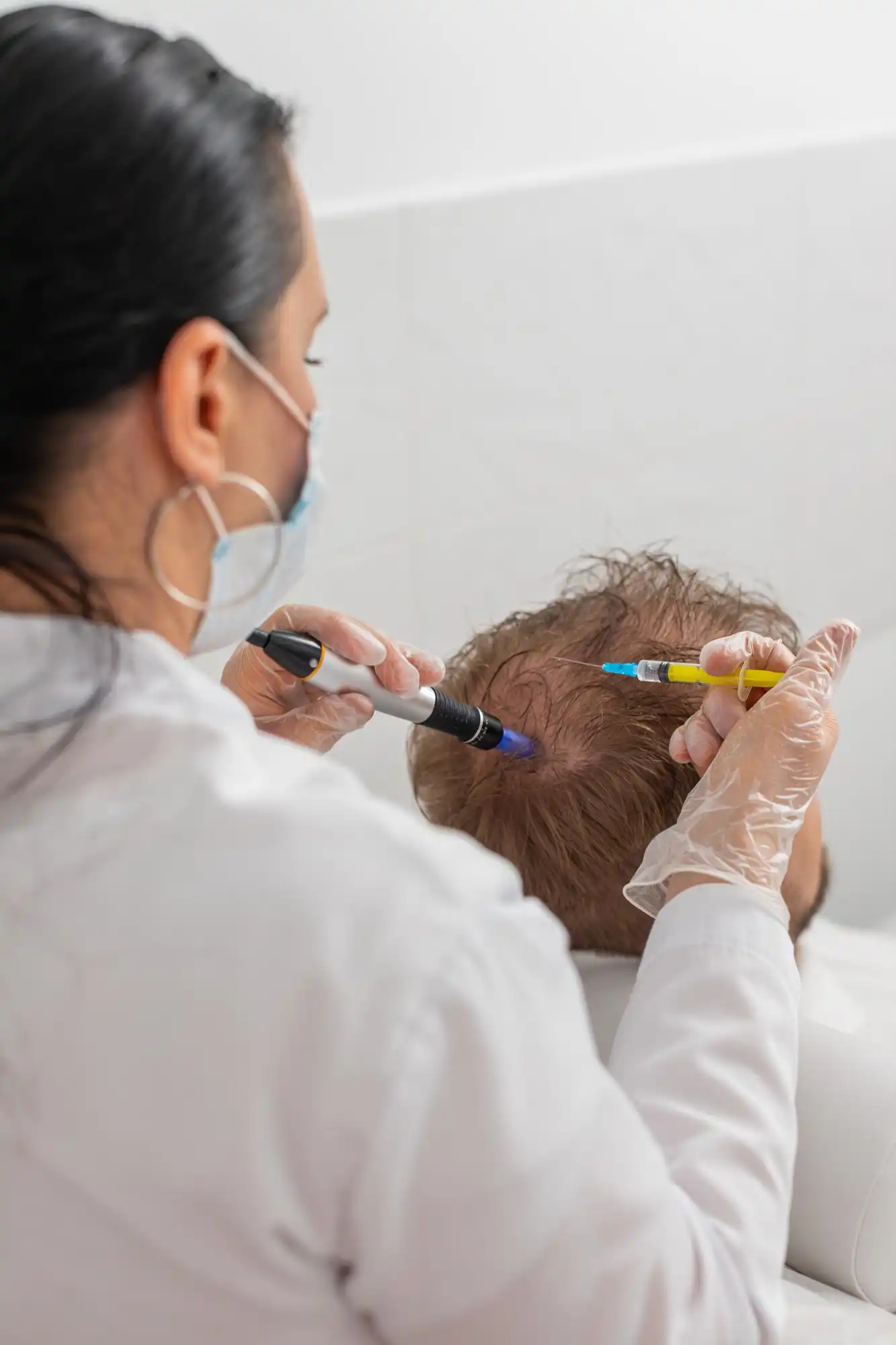
PRF hair restoration uses platelet rich fibrin, a concentrated preparation made from your own blood, injected directly into the scalp to support hair follicle health and density. Like PRP, it starts with a blood draw that is processed in a centrifuge, but PRF is spun at a lower speed and does not use an anticoagulant, which allows the platelets, white blood cells, and fibrin to form a denser, more structured matrix rather than remaining a liquid plasma.
That structural difference is the entire point. The fibrin matrix acts as a scaffold that holds the growth factors in place at the injection site and releases them gradually over time, rather than delivering them in a single, faster burst the way standard PRP does.
At TOCC Aesthetics, Tiffany Jarrett performs every PRF hair restoration appointment personally, from the blood draw through the final injection. Nothing is delegated to an assistant.
PRF differs from PRP primarily in platelet concentration, growth factor release pattern, and the presence of additional cell types. A 2025 systematic review across all fields of medicine found that injectable PRF yields higher platelet concentrations and a more sustained, long term release of growth factors compared to PRP.
PRP is processed with an anticoagulant, which keeps it in a liquid plasma state for injection but also means its growth factors are released relatively quickly after injection, generally within a day or two. PRF skips the anticoagulant entirely, which allows the natural clotting process to form a fibrin matrix that continues releasing growth factors over a period closer to a week or longer.
PRF also retains white blood cells and platelet derived fibrin alongside the platelets themselves, where standard PRP isolates platelet rich plasma more narrowly. Researchers have theorized that this broader cellular composition may contribute to the more sustained tissue response seen in some studies, though the exact mechanism is still being characterized.
A 2024 randomized controlled trial conducted at Sheikh Zayed Hospital comparing injectable PRF directly against PRP in 100 patients with androgenic alopecia found that the PRF group reported higher patient satisfaction and fewer adverse events than the PRP group, with the study’s authors concluding that injectable PRF was a more effective treatment modality for androgenic alopecia in their patient population.
This finding is consistent with broader patterns seen in PRF research across other applications. A separate systematic review comparing PRP and PRF for periorbital skin rejuvenation, a different but related use of both materials, found that PRF was associated with improvements in skin texture and fine lines, though the same review noted that PRF’s improvements sometimes diminished by the six month mark, while researchers concluded that current evidence does not support declaring either modality definitively superior across the board.
Taken together, the evidence is genuinely encouraging for PRF specifically as it relates to hair restoration, with at least one direct head to head trial favoring it over PRP, but the broader research base on PRF outside of that single trial is still earlier stage than the research base behind PRP, which has been studied in dramatically larger numbers of patients.


No. PRF carries the same regulatory status as PRP: it is an autologous blood product used off label for hair restoration, and no drug or device based hair loss treatment other than topical minoxidil and oral finasteride currently holds FDA approval for androgenetic alopecia specifically.
This reflects the same reality as PRP rather than a separate concern unique to PRF. Both treatments use a patient’s own blood, processed and re-injected for a purpose the FDA’s drug approval framework has not specifically reviewed for this indication. Tiffany discusses this distinction openly with every patient at consultation, regardless of which of the two treatments is being considered.


Every face is different. That’s why we use Ageless AI imaging to give you a personalized, photorealistic preview of your potential results before your appointment. Upload a photo, see the difference, then decide. Dr. Tiffany Jarrett will walk you through the rest at your consultation in Boynton Beach, FL.

