
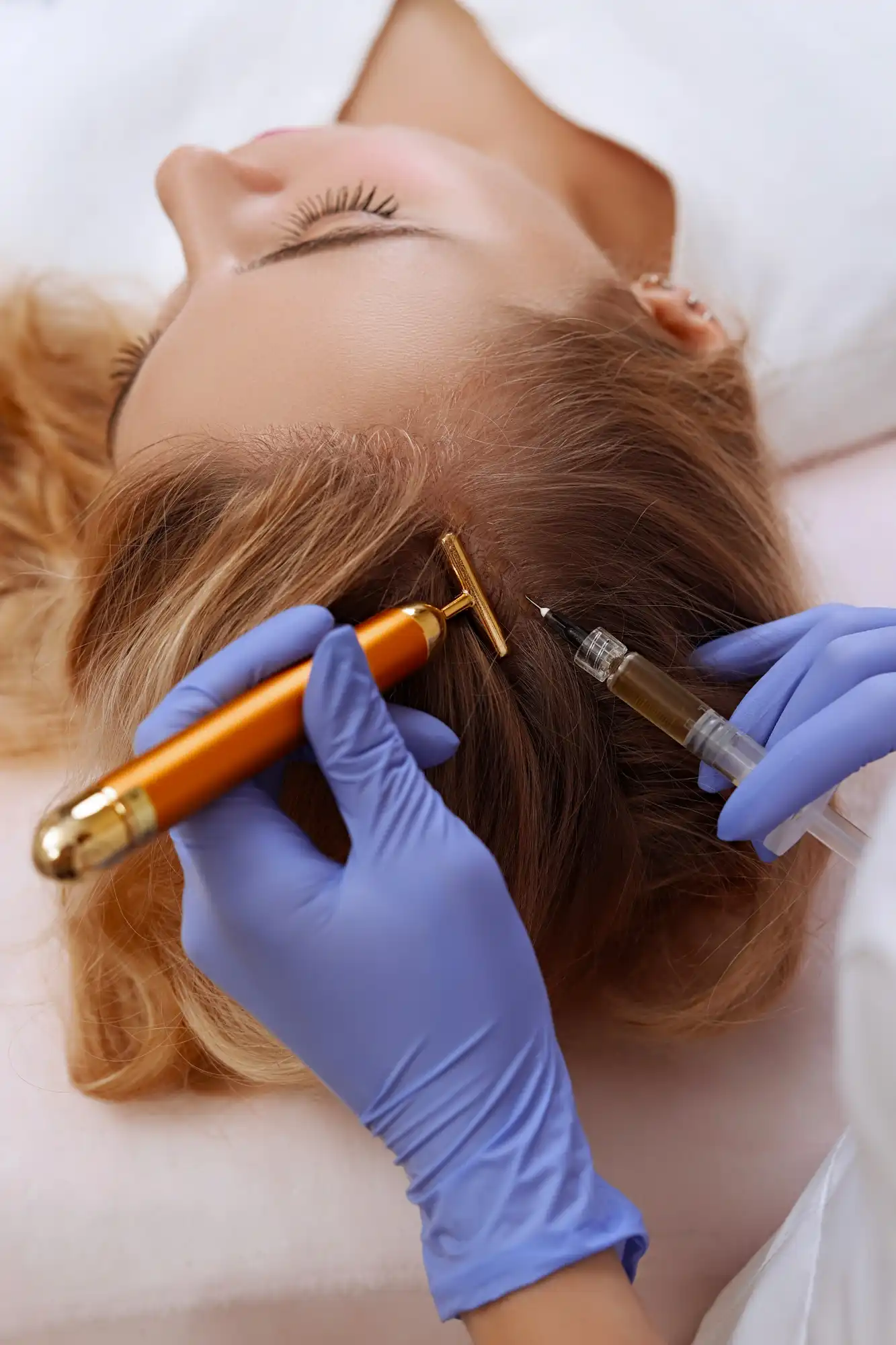
PRP hair restoration uses a concentration of your own platelets, drawn from a small blood sample, to deliver growth factors directly into the scalp where hair is thinning. The platelets are separated from the rest of your blood in a centrifuge, then injected into the areas of the scalp showing reduced density.
The treatment works with your biology rather than against it. Platelets naturally carry proteins that signal tissue repair and regeneration throughout the body. Concentrating them and placing them directly at the hair follicle gives those signals a much stronger, more localized presence than they would have circulating normally in the bloodstream.
At TOCC Aesthetics, Tiffany Jarrett performs every PRP hair restoration appointment personally, from the blood draw through the final injection. Nothing is delegated to an assistant.
PRP stimulates hair growth by delivering a concentrated dose of growth factors directly to the dermal papilla, the structure at the base of the hair follicle responsible for regulating the hair growth cycle. These growth factors, including platelet derived growth factor, vascular endothelial growth factor, and insulin like growth factor, signal dormant or weakened follicles to become more active.
Research published in the Journal of Cosmetic Dermatology in 2026 describes how the growth factors in PRP activate the Wnt signaling pathway, a biological mechanism directly tied to hair follicle cycling. The same review found that injecting PRP at the proper depth, between 1.5 and 2.0 millimeters to reach the hair bulb region, made a measurable difference in outcomes compared to more superficial injection.
In simple terms, the treatment prolongs the active growth phase of the hair cycle and reduces inflammation in the scalp that can otherwise interfere with healthy follicle function.
No single drug or device based treatment for hair loss other than topical minoxidil and oral finasteride currently holds FDA approval specifically for androgenetic alopecia, and PRP is no exception. PRP hair restoration is considered an off label use of an autologous blood product, meaning it uses your own blood components for a purpose not specifically reviewed and approved by the FDA for that indication.
This does not mean the treatment lacks evidence. It means the FDA approval pathway, which is built around new drugs and devices, has not been applied to this specific use of a patient’s own blood. Multiple peer reviewed systematic reviews and randomized controlled trials, summarized below, support its use as a legitimate, evidence informed option discussed openly between patient and provider.
Tiffany discusses this distinction honestly with every patient at consultation, because informed consent starts with an accurate picture of where the evidence actually stands.


The clinical evidence for PRP in androgenetic alopecia is described by recent reviewers as moderate but consistently positive. A 2026 systematic review and meta analysis covering 43 randomized controlled trials and 1,877 participants found that activated PRP was effective at increasing hair density and reducing recurrence compared with placebo.
A separate 2025 meta analysis comparing PRP directly against topical minoxidil, the FDA approved first line treatment, found no statistically significant difference between the two in improving hair density, positioning PRP as a comparable alternative or a complementary addition rather than a replacement for established care.
Researchers are consistent on one point: protocols vary considerably between studies and providers, and platelet concentration, activation method, and injection depth all influence outcomes. This is part of why the skill and consistency of the provider performing the treatment matters as much as the treatment itself.


Every face is different. That’s why we use Ageless AI imaging to give you a personalized, photorealistic preview of your potential results before your appointment. Upload a photo, see the difference, then decide. Dr. Tiffany Jarrett will walk you through the rest at your consultation in Boynton Beach, FL.

